Nature · Ghunsa
The Kanchenjunga Conservation Area story
A conversation over tea about how Ghunsa's valley came to be run by its own people: the 1997 conservation area, the 2006 handover to a local council, the helicopter crash that followed, and the snow leopards and red pandas the area protects.
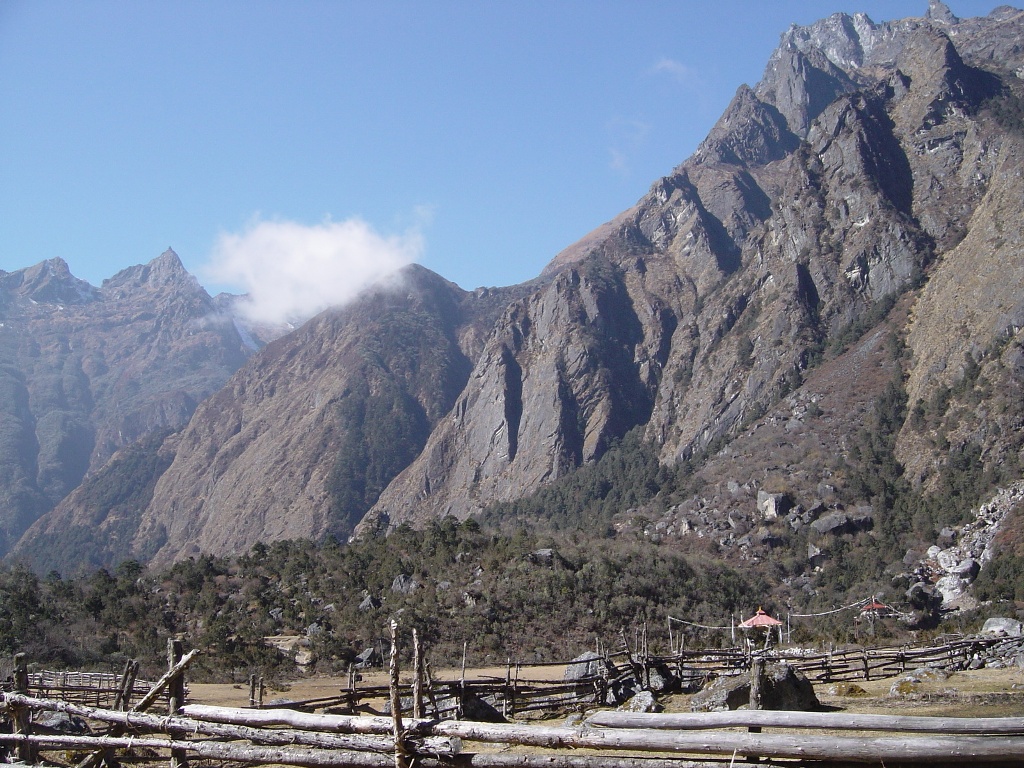

The Kanchenjunga Conservation Area covers 2,035 km² of Taplejung's high country, from the forests of the lower valleys to the glaciers of Kanchenjunga, bordering Tibet and Sikkim. It was declared in 1997, and in September 2006 its management was handed to a council of local people, a step in Nepal's move toward community-run conservation. Your permit fees go to the council for conservation and community work.
During the handover, a chartered helicopter carrying officials, conservationists and WWF staff on a flight between Phungling and Ghunsa crashed. All 24 aboard died, including some of Nepal's best-known figures in conservation. Our guide tells the story as people in the valley remember it, and what has changed since: lodges, trails, local rules on firewood and rubbish, and the way the council works with the villages.
We also talk about wildlife: snow leopards, blue sheep, musk deer and red pandas live in the conservation area, and you may see blue sheep on the slopes above Kambachen. Our guide explains the simple rules trekkers follow to help: carry out plastic, use kerosene or gas rather than wood where possible, keep to trails, and never feed or chase animals. It is a short conversation that gives the next days new meaning.
Good for
Questions
Who manages the Kanchenjunga Conservation Area?
Since 2006 a local management council has run the Kanchenjunga Conservation Area, with support from the government's national parks department. Permit fees go to conservation and community projects. Rules and fees can change; check current status before you travel.
Can you see snow leopards near Ghunsa?
Snow leopards live in the Kanchenjunga Conservation Area, but sightings are very rare. Blue sheep, their main prey, are seen more often on the slopes above Kambachen and Lhonak. Keep your camera ready and your voice low.
What permits are needed for Ghunsa?
You need the Kanchenjunga Conservation Area entry permit and a restricted area permit for this part of Taplejung, issued through a registered trekking agency, usually for at least two trekkers with a licensed guide. Since April 2023 a licensed guide is required in any case. Check current status before you travel.
Also in Ghunsa
More ways to spend the day
TrekkingAcclimatisation hike above Ghunsa
A rest-day hike from Ghunsa up the valley side, gaining a few hundred metres and returning to sleep low, following …
 Spiritual
Morning at the Ghunsa gompa
A short, quiet visit to the Buddhist temple above Ghunsa village, with prayer wheels, butter lamps and murals, and a …
HeritageVillage lanes and yak herders of Ghunsa
An afternoon walk through Ghunsa's stone and timber lanes as yaks and herders return, with a guide who explains seasonal …