Asoj 2083 BSअसोज २०८३· Nepal runs on its own calendar

Glacier night and khata silver · Koshi Province

Everest & Solukhumbu

सोलुखुम्बु Khumbu and Shorong (Sherpa)

Solukhumbu is the Sherpa homeland of north-east Nepal and the district that holds Everest. High Khumbu, inside Sagarmatha National Park, has Namche, Tengboche, Gokyo and Base Camp; lower Solu has forested hills, apple orchards and old monasteries. Go in October–November or March–May, with time to acclimatise.

Heights2,400 – 8,849 m
BestMar – Apr · Oct – Nov
TaglineSherpa valleys, sacred peaks and the Everest trail
Everest & Solukhumbu
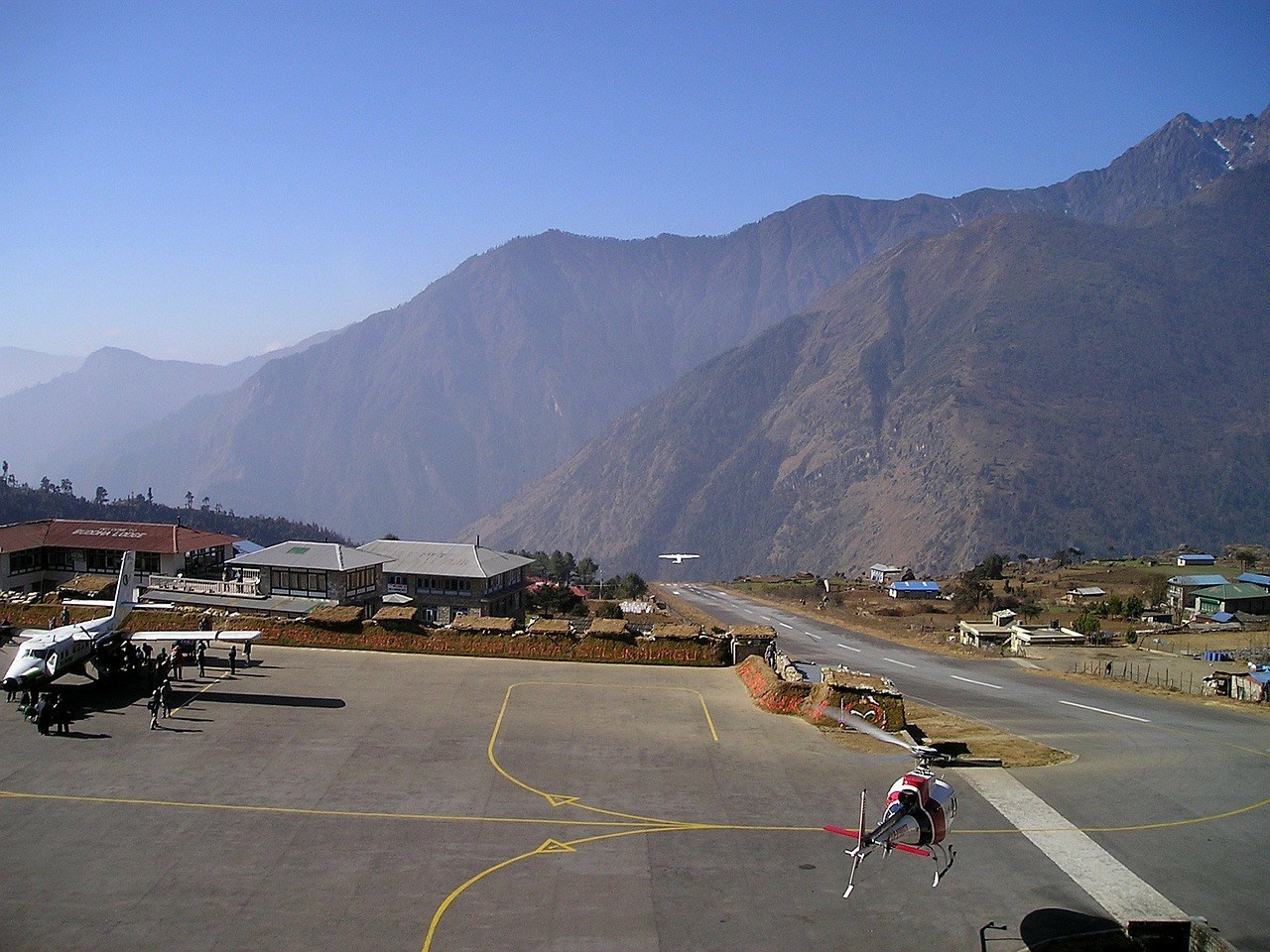
Photo: Vyacheslav Argenberg · CC BY 4.0, Wikimedia Commons

Solukhumbu runs from the green, terraced hills of Solu in the south to the ice of Everest, Lhotse and Cho Oyu on the Tibetan border. Sherpas call the two halves Shorong and Khumbu. Most visitors know only Khumbu, the high valleys above Lukla, where the Everest trail climbs from pine forest to yak pasture to glacier over about a week.

Khumbu is a living Sherpa homeland, not a wilderness. Villages such as Namche, Khumjung, Thame and Pangboche have been farmed and herded for centuries; gompas such as Tengboche and Pangboche hold the valley's spiritual life; and mountains such as Khumbila are homes of protector deities. Since 1976 the area has been Sagarmatha National Park, a UNESCO World Heritage Site since 1979.

Solu, below, is gentler and much quieter: Phaplu's airstrip and Salleri's bazaar, the cliff-top Chiwong Gompa, Junbesi and its great nunnery of Thubten Chholing, Ringmo's apple orchards and the rhododendron forests of the Lamjura La. It was the old walking route to Everest before Lukla's airstrip opened in 1964, and it still makes the best slow approach.

We plan this region around altitude. Above Namche, at about 3,440 m, the body needs time, and the safe pattern is slow climbing, rest days and a willingness to turn back. Within that frame there is a lot to choose from: Base Camp and Kala Patthar, the Gokyo lakes, the high passes, or a week of Sherpa villages and monasteries that never goes above 4,000 m.

Why go

What Everest & Solukhumbu does best

Namche and its Saturday market

Khumbu's trading town at about 3,440 m, where every trek rests two nights. On Saturday mornings porters who walked for days from Solu and the Rai hills sell rice, vegetables and eggs on the terraces, keeping an old trade alive.

Tengboche and Mani Rimdu

The largest gompa in Khumbu, founded in 1916 and rebuilt after the 1934 earthquake and the 1989 fire, faces Ama Dablam from a forested saddle. In October or November its courtyard fills for the masked dances of Mani Rimdu.

Kala Patthar and Base Camp

From Gorak Shep, walk onto the Khumbu glacier to Everest Base Camp at about 5,364 m, then climb Kala Patthar, about 5,644 m, for the trek's great view of Everest's summit above the Khumbu Icefall.

Gokyo lakes and Gokyo Ri

A chain of turquoise lakes beside the Ngozumpa glacier, listed as a Ramsar wetland in 2007. Gokyo Ri above shows four 8,000 m peaks at once: Cho Oyu, Everest, Lhotse and Makalu.

Khumjung, Thame and the Sherpa story

Hillary's first school of 1961 and a revered yeti scalp in Khumjung; Tenzing Norgay's childhood village and the old salt road to Tibet in Thame. These villages tell how Sherpa life and Everest climbing shaped each other.

Solu's monasteries and orchards

Below Khumbu, Chiwong Gompa on its cliff above Phaplu, Junbesi's great nunnery of Thubten Chholing, Ringmo's apple orchards and the rhododendron forests of the Lamjura La make a gentle, low-altitude week.

१The story of Everest & Solukhumbu

The people of the east and their hidden valley

Sherpa means 'people of the east', from shar, east, and pa, people. The Sherpas' ancestors came from Kham in eastern Tibet, crossing the Nangpa La glacier pass west of Thame roughly 500 years ago and settling in Khumbu and Solu. They brought Tibetan Buddhism of the Nyingma school, a language close to Tibetan, and a clan system whose members still marry outside their own clan. For centuries they farmed barley and buckwheat, herded yaks and traded salt and grain across the Nangpa La.

Potatoes, which reached Khumbu in the 19th century, changed the economy, feeding larger villages at high altitude. Monasteries followed: Pangboche, attributed to Lama Sangwa Dorje and considered the oldest; Thame; Tengboche, founded in 1916 with the blessing of Tibet's Rongbuk Monastery; and in Solu, Chiwong around 1920 and Thubten Chholing in 1968, built by lamas who fled Tibet after 1959.

The 20th century brought the climbers. Sherpas walked to Darjeeling to carry loads for British expeditions on the Tibetan side of Everest in the 1920s and 1930s. When Nepal opened to foreigners after 1950, the approach moved to Khumbu, and on 29 May 1953 Tenzing Norgay, who grew up in Thame, and Edmund Hillary reached the summit. Hillary returned again and again; his Himalayan Trust built Khumjung's school in 1961, the Lukla airstrip in 1964 and Kunde's hospital in 1966.

Today trekking and climbing are the economy of Khumbu, with lodges in every village and Sherpa companies running expeditions. The changes bring hard questions: crowding on Everest, rubbish, the risks borne by climbing Sherpas, and a warming climate that grows glacial lakes, as the flood that struck Thame in August 2024 showed. Sherpa families are meeting them with the same mix of faith and practicality that built the valleys.

२The legend
As it is told · सोलुखुम्बु

Sherpa tradition holds that Khumbu is a beyul, a hidden valley blessed by Guru Rinpoche, the eighth-century teacher Padmasambhava, as a sanctuary to be opened in times of trouble. Its guardian is Khumbu Yul Lha, the god of the Khumbu country, who lives on the sacred peak of Khumbila above Khumjung and is shown riding a white horse. Everest itself is home to the goddess Miyolangsangma, and climbers ask her permission at a base camp puja before setting foot on the mountain.

३The people

Who lives here

Sherpas are the main community of high Khumbu and many Solu villages, speaking Sherpa, a Tibetic language, and practising Nyingma Buddhism. Lower Solu is mixed: Rai, Magar, Tamang, Newar and Khas families farm the terraces and trade in Salleri. Rai and Tamang men and women from lower valleys work as porters across the region. Nepali is the shared language; English is common in lodges.

Local name: Khumbu and Shorong (Sherpa)

४Words you will hear
Sherpa
བཀྲ་ཤིས་བདེ་ལེགས
tashi delek

Greeting wishing good fortune

Sherpa
ཇོ་མོ་གླང་མ
Chomolungma

Sherpa and Tibetan name for Everest

Sherpa
ཤར་པ
Sherpa

'People of the east', from shar (east) and pa (people)

Tibetan
སྦས་ཡུལ
beyul

Hidden sacred valley blessed by Guru Rinpoche; Khumbu is one

Sherpa
ཁ་བཏགས
khata

White scarf given as blessing, welcome or farewell

Every word on this site

५What to eat

Solja (Sherpa butter tea)

Solja is black tea churned with salt and butter, the drink of every Sherpa kitchen from Junbesi to Gorak Shep. Hosts refill your cup the moment it drops. It tastes more like a thin soup than tea, and on a frozen morning above 4,000 m it makes complete sense.

६Few people know

Things most guides leave out

Sagarmatha National Park was created in 1976 and inscribed as a UNESCO World Heritage Site in 1979. It covers about 1,148 square kilometres of Khumbu, including Everest, Lhotse, Cho Oyu and the Sherpa villages.

UNESCO World Heritage listing: Sagarmatha National Park

The name Sherpa comes from shar, east, and pa, people. Sherpa ancestors migrated from Kham in eastern Tibet roughly 500 years ago, crossing the Nangpa La into Khumbu.

Wikipedia: Sherpa people

The Gokyo and associated lakes in upper Khumbu were designated a Ramsar wetland of international importance in 2007, covering about 7,770 hectares.

Ramsar Sites Information Service: Gokyo and associated lakes

Edmund Hillary's Himalayan Trust built Khumjung School in 1961, the Lukla airstrip in 1964 and Kunde Hospital in 1966, all at the request of Sherpa communities.

Wikipedia: Edmund Hillary; Wikipedia: Kunde Hospital

Thame, a small village west of Namche, is the home of Kami Rita Sherpa, who holds the record for the most ascents of Everest, and of Apa Sherpa, who held it before him.

Wikipedia: Thame, Nepal

Untold Nepal, region by region

Places

Where to go in Everest & Solukhumbu

Lukla Everest & Solukhumbu2,860 m
trek stopLekhलुक्ला

Lukla

The sloping airstrip where nearly every Everest walk begins

Mar – Apr · Oct – Nov
Namche Bazaar Everest & Solukhumbu3,440 m
trek stopLekhनाम्चे बजार

Namche Bazaar

Khumbu's trading town, built in a bowl at 3,440 m

Mar – Apr · Oct – Nov
Tengboche Everest & Solukhumbu3,867 m
monasteryLekhतेङबोचे

Tengboche

Khumbu's great monastery, founded 1916, rebuilt twice

Mar – Apr · Oct – Nov
Dingboche Everest & Solukhumbu4,410 m
trek stopHimalडिङबोचे

Dingboche

Walled barley fields at 4,410 m and the big acclimatisation stop

Apr – May · Oct – Nov
Everest Base Camp Everest & Solukhumbu5,364 m
base campHimalसगरमाथा आधार शिविर

Everest Base Camp

A tent city on moving ice at 5,364 m, with Kala Patthar above

Apr – May · Oct – Nov
Khumjung Everest & Solukhumbu3,790 m
villageLekhखुम्जुङ

Khumjung

Hillary's first school and a yeti scalp under sacred Khumbila

Mar – Apr · Oct – Nov
Gokyo Everest & Solukhumbu4,790 m
lakeHimalगोक्यो

Gokyo

Turquoise lakes, a Ramsar site and four 8,000 m peaks from Gokyo Ri

Apr – May · Oct – Nov
Thame Everest & Solukhumbu3,800 m
villageLekhथामे

Thame

Tenzing Norgay's village on the old salt road to Tibet

Mar – May · Oct – Nov
Chhukung Everest & Solukhumbu4,730 m
trek stopHimalछुकुङ

Chhukung

Under Lhotse's south face, the road end for Island Peak

Apr – May · Oct – Nov
Junbesi Everest & Solukhumbu2,675 m
villageLekhजुनबेसी

Junbesi

Solu's monastery village on the old walking road to Everest

Mar – Apr · Oct – Nov
Pangboche Everest & Solukhumbu3,985 m
villageLekhपाङबोचे

Pangboche

Khumbu's oldest gompa and the story of the stolen yeti hand

Mar – Apr · Oct – Nov
Phaplu Everest & Solukhumbu2,413 m
hill townPahadफाप्लु

Phaplu

Solu's airstrip town below cliff-top Chiwong Gompa

Mar – Apr · Oct – Nov
Map of Chhukung, Dingboche, Everest Base Camp, Gokyo, Junbesi, Khumjung, Lukla, Namche Bazaar, Pangboche, Phaplu, Tengboche, ThameIndiaChinaBhutanBangladeshNepalGandakiKoshiChhukung1Dingboche2Everest Base Camp3Gokyo4Junbesi5Khumjung6Lukla7Namche Bazaar8Pangboche9Phaplu10Tengboche11Thame12250 kmN
  1. 1Chhukung
  2. 2Dingboche
  3. 3Everest Base Camp
  4. 4Gokyo
  5. 5Junbesi
  6. 6Khumjung
  7. 7Lukla
  8. 8Namche Bazaar
  9. 9Pangboche
  10. 10Phaplu
  11. 11Tengboche
  12. 12Thame
Drawn by Book Nepal Trip from Natural Earth outlines (public domain). International borders as depicted by Nepal. Rivers: Karnali, Gandaki and Koshi systems. Not for navigation.

Trips

Trips in Everest & Solukhumbu

Starting points we change for every traveller. The line on each card is the sleeping height of every night.

Filter every trip
Everest & Solukhumbumax 5,545 m
17 nightsStrenuoustrek

Gokyo Lakes, Cho La and Everest Base Camp

A loop that sees the Khumbu from two valleys. You walk up to the turquoise Gokyo lakes and climb Gokyo Ri, cross …

fromUSD 1,950See the days
Everest & Solukhumbumax 5,545 m
11 nightsChallengingtrek

Everest Base Camp Trek with Helicopter Return

Walk up to Everest Base Camp the proper way, with the same acclimatisation as the classic trek, then fly back to Kathmandu …

fromUSD 2,650See the days
Everest & Solukhumbumax 5,545 m
14 nightsChallengingtrek

Everest Base Camp Trek

The classic walk from Lukla to the foot of the Khumbu Icefall and up Kala Patthar for sunrise on Everest. Fourteen nights …

fromUSD 1,650See the days
Everest & Solukhumbumax 4,570 m
11 nightsModeratetrek

Everest Comfort Lodge Trek

The Khumbu in comfort. Eleven nights pairing Dwarika's in Kathmandu with the best lodges on the trail: Yeti Mountain Home in Namche …

fromUSD 3,150See the days
Everest & Solukhumbumax 3,880 m
8 nightsModeratefamily

Everest Family Trek to Namche

A gentle Everest trek for families with children from about eight. Eight nights, short days of two to five hours, three nights …

fromUSD 1,300See the days
Everest & Solukhumbumax 5,550 m
19 nightsStrenuoustrek

Everest Three Passes Trek

The full circuit of the Khumbu: three passes above 5,300 m, Kongma La, Cho La and Renjo La, linking the Imja, Khumbu, …

fromUSD 2,150See the days
Everest & Solukhumbumax 3,880 m
7 nightsModeratetrek

Everest View Trek: Namche and Khumjung

A short Everest trek for people with one week. You fly to Lukla, walk to Namche Bazaar, explore the Sherpa villages of …

fromUSD 1,350See the days
Everest & Solukhumbumax 5,360 m
13 nightsChallengingtrek

Gokyo Lakes and Renjo La Trek

A quieter Everest trek that trades base camp for lakes. You walk up the Gokyo valley to the turquoise lakes beside the …

fromUSD 1,550See the days
Everest & Solukhumbumax 6,189 m
17 nightsStrenuousadventure

Island Peak Climb with Everest Base Camp

Your first Himalayan summit. Seventeen nights that use the Everest Base Camp trek and Kala Patthar to acclimatise, then move into the …

fromUSD 3,100See the days
Everest & Solukhumbumax 5,545 m
3 nightsEasytour

Kathmandu and Everest Helicopter Day

See Everest without trekking. Three nights at Dwarika's Hotel in Kathmandu with a shared helicopter morning to the Khumbu: a short landing …

fromUSD 1,850See the days
Everest & Solukhumbumax 4,065 m
7 nightsModeratetrek

Pikey Peak and Junbesi Trek in Solu

A short, quiet trek in Solu, the lower half of Solukhumbu. Drive to Phaplu, walk to the Sherpa village of Junbesi and …

fromUSD 950See the days
Everest & Solukhumbumax 3,867 m
16 nightsChallengingtrek

Solu to Khumbu Walk-in: Phaplu to Tengboche

Walk into the Everest region the way expeditions did before the Lukla airstrip. Sixteen nights from Phaplu across the ridges of Solu, …

fromUSD 1,850See the days
Everest & Solukhumbumax 3,867 m
11 nightsModerateculture

Tengboche Mani Rimdu Festival Trek

Time your Everest trek to the Mani Rimdu festival at Tengboche Monastery, held each October or November by the Tibetan calendar. Eleven …

fromUSD 1,550See the days
Everest & Solukhumbumax 3,970 m
10 nightsModerateculture

Thame and Sherpa Heritage Trek

A trek through the Sherpa villages that raised generations of Everest climbers. Ten nights linking Namche Bazaar, Thame in the Bhote Koshi …

fromUSD 1,450See the days

Experiences

Things to do, coded by prayer-flag colour

Getting there

How to reach Everest & Solukhumbu

Almost everyone reaches Khumbu by air. Small aircraft fly from Kathmandu to Tenzing-Hillary Airport at Lukla, about 2,860 m, in about 35 minutes. Since 2019, in the peak months, roughly March to May and October to November, most Lukla flights have operated from Ramechhap airport at Manthali, a 4–5 hour pre-dawn drive from Kathmandu, with a 20-minute flight from there. Flights run only in clear weather, so keep spare days. There is no road to Lukla or Namche. Solu is reached by jeep from Kathmandu to Salleri and Phaplu in 10–12 hours via Okhaldhunga, or by a short flight to Phaplu when services run. From Phaplu, the old walking route reaches the main Everest trail below Lukla in 4–5 days. Check current status before you travel, as flight routings change each season.

Permits

Trekkers in Khumbu need two permits: the Khumbu Pasanglhamu Rural Municipality entry permit, about NPR 2,000 per person, collected at Lukla or on the trail just beyond, and the Sagarmatha National Park entry permit, about NPR 3,000 for foreigners, paid at Monjo. Since April 2023 Nepal requires foreign trekkers in national parks and conservation areas to trek with a licensed guide; in Khumbu, where the local municipality runs its own permit, the rule has been applied unevenly. Climbing peaks such as Island Peak needs a separate climbing permit. Solu outside the park needs no trekking permit. Check current status before you travel.

Routes

Questions

Everest & Solukhumbu: what travellers ask

What is the best time to visit the Everest region?

October and November are the best months, with clear skies, stable weather and good views. March to May is the second season, with rhododendrons and warmer days but more haze. December to February are cold but clear and quiet. June to September is monsoon, with cloud, rain and frequent Lukla flight cancellations.

How do I get to the Everest region from Kathmandu?

Fly to Lukla, about 35 minutes from Kathmandu, or in peak seasons drive 4–5 hours to Ramechhap airport at Manthali and fly 20 minutes from there. There is no road to Lukla. For Solu, drive 10–12 hours to Phaplu or fly when services run. Check current status before you travel.

Do I need a guide to trek in the Everest region?

Since April 2023 Nepal requires foreign trekkers in national parks and conservation areas to trek with a licensed guide. In Khumbu, where the local municipality runs its own permit, the rule has been applied unevenly. A licensed guide also helps with altitude, lodges and flight delays. Check current status before you travel.

What permits do I need for Everest and Khumbu?

The Khumbu Pasanglhamu Rural Municipality permit, about NPR 2,000, and the Sagarmatha National Park entry permit, about NPR 3,000 for foreigners. Climbing peaks such as Island Peak needs a separate climbing permit. Solu outside the park needs no trekking permit. Fees change; check current status before you travel.

How do I avoid altitude sickness on the Everest trek?

Climb slowly: above 3,000 m, raise your sleeping altitude by no more than about 500 m a night and take a rest day every 1,000 m or so, usually in Namche and Dingboche. Drink 3–4 litres a day, avoid alcohol and tell your guide about symptoms early. If they worsen, descend.

Who are the Sherpas?

Sherpas are an ethnic community whose ancestors came from Kham in eastern Tibet roughly 500 years ago. The name means 'people of the east'. They speak Sherpa, practise Nyingma Buddhism and live in Khumbu and Solu. Many work as mountaineering and trekking guides, but Sherpa is an ethnicity, not a job title.

Can I visit the Everest region without trekking high?

Yes. A 6–8 day trip from Lukla to Namche, Khumjung and Tengboche reaches about 3,900 m and gives views of Everest from Syangboche and Tengboche. Solu offers monasteries, villages and orchards between 2,000 and 3,000 m around Phaplu and Junbesi. A helicopter flight is another option.

How much does an Everest Base Camp trek cost?

A 14-night teahouse trek with a licensed guide, porter, permits, Lukla flights and lodges costs from about USD 1,450 to 1,900 per person, twin sharing. Gokyo treks cost similar amounts. Better lodges and helicopter returns cost more. Budget extra for drinks, showers, charging, Wi-Fi and tips.

What is the difference between Solu and Khumbu?

Solukhumbu District has two parts. Khumbu, the high north, lies mostly inside Sagarmatha National Park and holds Namche, Tengboche, Gokyo and Everest. Solu, the lower south, around Phaplu, Salleri and Junbesi, is greener, warmer and quieter, with forests, orchards and old monasteries. Sherpas call Solu Shorong.

Plan with a local planner

Tell us your height, we will find the trail

Easy hills or a 5,000 m pass, a week or a month: three short questions and a planner sends a first plan, with the sleeping height of every night and an itemised price.

  1. १Tell us where, when and how high you want to go
  2. २Get a first plan and an itemised price within one working day
  3. ३Change anything until it fits. Pay a deposit only when you book
Plan my Nepal trip