
How the year works in the east
Eastern Nepal gets more rain than the centre and west of the country, because the monsoon arrives here first from the Bay of Bengal and leaves last. That shapes everything. The clear, dry season runs from about October to April, with the clearest skies in October, November and December. Spring warms quickly and brings haze from the plains by May. The monsoon usually starts in early June and lasts into late September, with heavy rain, cloud and landslides.
Altitude matters as much as the month. The plains of Jhapa and Morang at under 100 m are hot from April to September. The tea hills of Ilam, Dhankuta and Hile, between about 1,200 m and 1,900 m, are pleasant almost all year outside the monsoon. Above 3,500 m, on the Kanchenjunga and Makalu treks, winter brings deep snow and closed lodges.
Use the table for a quick answer, then read the season notes for detail.
| Month | Rating | Weather in the hills | Best for |
|---|---|---|---|
| January | Good | Clear and cold, frost at night; fog on the plains | Ilam, Kirat hills, Koshi Tappu birds |
| February | Good | Clear, warming; snow above 3,500 m | Koshi Tappu birds, hill towns, Sandakpur views |
| March | Best | Warm days, some haze; rhododendrons begin | First flush tea, rhododendron walks, early treks |
| April | Best | Warm, hazier afternoons; flowers in the forests | Kanchenjunga and Makalu treks, tea, Sandakpur |
| May | Good | Hot on the plains, pre-monsoon showers | Second flush tea, lower treks, Ubhauli Sakela |
| June | Avoid | Monsoon arrives; heavy rain, leeches | Tea gardens for keen visitors only |
| July | Avoid | Heaviest rain, landslides, cloud | Not recommended for treks or long drives |
| August | Avoid | Heavy rain continues | Not recommended for treks or long drives |
| September | Good late | Rain easing, green and humid; clears late in the month | Late-month treks, tea, Dashain in some years |
| October | Best | Clear skies, warm days, cool nights | Kanchenjunga, Makalu, Sandakpur, autumn tea |
| November | Best | Clear and dry, colder nights | Treks, mountain views, Udhauli and Chasok festivals |
| December | Good | Clear and cold, snow on high passes | Ilam, Sandakpur, Koshi Tappu birds, hill towns |
Autumn: October and November
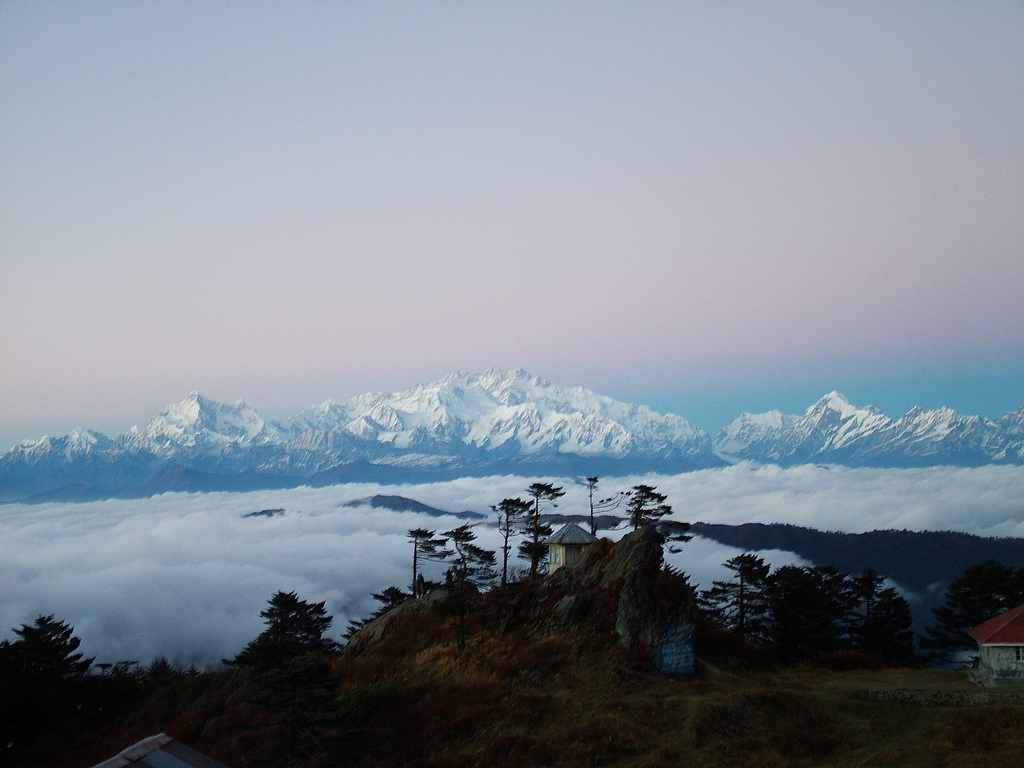
Autumn is the best time to be in eastern Nepal. The monsoon has washed the air clean, the skies are clear from dawn until late morning on most days, and the terraces are golden with ripe millet and rice. This is the season for the Kanchenjunga and Makalu treks, with stable weather, open lodges and passes usually free of deep snow until late November. It is also the best time for Sandakpur, where Everest, Lhotse, Makalu and Kanchenjunga line up at sunrise.
In the tea hills, the autumn flush is picked in October and November, producing round, sweet teas, and factories are busy. Dashain and Tihar, Nepal's biggest festivals, often fall in October or early November; roads and buses are crowded as people travel home, and many offices close for a week or more. Udhauli Sakela and the Limbu harvest festival Chasok Tangnam fall at the full moon of Mangsir, in November or December. Nights are cold above 3,000 m, often well below freezing at Pang Pema and Makalu Base Camp by November.
Winter: December to February
Winter in the east is clear, dry and cold. In the hills around Ilam, Dhankuta and Hile, days are often sunny and mild and nights near freezing, and the mountain views can be the sharpest of the year. Oranges ripen around Dhankuta, and hill towns are quiet. Sandakpur is very cold at night but often perfectly clear at dawn.
This is the season for Koshi Tappu, where winter migrant ducks, geese and other water birds gather on the Sapta Koshi from about November to March. On the plains, thick fog often sits until late morning in December and January and can delay flights to Bhadrapur and Biratnagar.
High treks are mostly out of season. Snow blocks Sele Le on the Kanchenjunga circuit and Shipton La on the Makalu route, and most high lodges close. Pathibhara can be icy at the top.
A planner can turn what you are reading into days, nights and a price.
Spring: March to May
Spring is the second-best season and, for many people, the most beautiful. Rhododendrons flower from March in the middle hills and into May higher up, turning whole forests red, pink and white, especially on the approaches to Kanchenjunga, Makalu and the Singalila ridge. The first flush of tea is picked from late March, and Ilam's factories start up again after the winter.
Spring treks are good from late March to mid-May, though mornings are less reliably clear than in autumn and haze from the plains often hides distant peaks by midday. Snow can linger on Shipton La and Sele Le into April. By May the plains are very hot, often above 35 °C, and pre-monsoon storms build in the afternoons. Ubhauli Sakela, the spring festival of the Rai, falls at the full moon of Baisakh in April or May.
Monsoon: June to September
The monsoon is long and heavy in the east. Rain falls most days from June to early September, often for hours at a time, and the hills turn deep green. Leeches are common in the forests, landslides block roads for hours or days, and cloud hides the mountains for weeks. Flights are often delayed. We do not run treks or long overland trips in these months.
There are quiet pleasures, though. The tea gardens are lush and the monsoon flush is being picked, fruit is everywhere, and Ilam's hill towns are cool compared with the plains. If you come, plan short distances, keep flexible days and travel with a driver who knows which roads are open. By late September the rain usually eases and skies begin to clear.
September is a month of change. In some years the rain stops early and the last two weeks are clear and green, perfect for tea and hill towns; in others the monsoon lingers into October. We start treks from the last week of September only when the forecast looks settled.
Festivals and holidays that affect travel
Nepal's calendar is lunar, so festival dates move by a few weeks each year. Some festivals are a reason to come; others are a reason to plan carefully. Dashain, usually in late September or October, is the biggest festival of the year. For about two weeks people travel home to their villages, buses and flights are full, and many offices, shops and some lodges close. Tihar follows two to three weeks later, with lamps, garlands and sel roti in every home.
On the plains of Jhapa, Morang and Sunsari, Chhath, a few days after Tihar, brings crowds to rivers and ponds at sunrise and sunset to worship the sun, a moving sight if you are nearby. In the hills, the Kirat festivals of Sakela and Chasok are the ones to look for. Pathibhara Devi is busiest around Dashain and on Saturdays all year.
If you plan to travel during Dashain or Tihar, book flights and cars early, expect higher prices and allow extra time on the roads.
What to pack for each season
In autumn and spring, pack for warm days and cool nights in the hills: light layers, a fleece, a light down jacket and a rain shell. On high treks you need full winter kit for the upper camps, including a four-season sleeping bag, warm gloves and a hat. In winter, add a heavier down jacket for Sandakpur and early mornings, and a warm layer for foggy days on the plains. In the monsoon, bring a good umbrella, quick-drying clothes, leech socks for forest walks and waterproof covers for bags and electronics.
Whatever the season, bring sun protection: the sun is strong at altitude even when the air is cold.
Choosing a month for your trip
- Kanchenjunga and Makalu treks: October to mid-November first, then April to early May.
- Sandakpur and mountain views: October to December first, then February to March.
- Ilam tea: late March to May for first and second flush, October to November for autumn tea.
- Koshi Tappu birding: November to March.
- Kirat festivals: Ubhauli in April or May, Udhauli and Chasok in November or December.
- Rhododendrons: March and April in the middle hills, into May higher up.
- Avoid: June to August for treks and long drives.
Questions
What is the best month to visit eastern Nepal?
October is the best single month, with clear skies, warm days, open trekking lodges and the autumn tea flush. November is almost as good, with colder nights and very clear mountain views. If you cannot travel in autumn, April is the best spring month, with rhododendrons and first or second flush tea.
When is the best time for the Kanchenjunga trek?
October and early November are best, with stable weather, clear views and passes usually free of deep snow. April and early May are next, with flowers in the forests but more afternoon cloud. Avoid the monsoon from June to August and the winter months, when snow blocks passes and lodges close.
Is it worth visiting eastern Nepal in the monsoon?
For most travellers, no. Heavy rain, leeches, landslides and cloud make treks and long drives difficult, and mountain views are rare. If you are flexible and only want to see the tea hills, a short trip to Ilam in the monsoon can be peaceful and green, but allow extra time for every journey.
When does the monsoon start in eastern Nepal?
The monsoon usually reaches eastern Nepal in early June, a little earlier than in the west of the country, and continues until late September. Pre-monsoon storms often start in May. The exact dates change from year to year, so check current status before you travel and keep flexible days in your plans.
When is the best time to see Kanchenjunga from Sandakpur?
October to December gives the clearest views, especially at sunrise. February and March can also be clear. In spring, haze from the plains often hides the more distant peaks by mid-morning, and in the monsoon cloud usually covers the whole range.
When is tea picked in Ilam?
Tea is picked from late March to November. The first flush comes in late March and April, the second flush in May and June, the monsoon flush from July to September, and the autumn flush in October and November. The bushes rest from December to February, and factories are quiet.
How cold does it get in eastern Nepal in winter?
In the hills around Ilam, Dhankuta and Hile, winter days are often mild and sunny and nights near freezing. At Sandakpur, at 3,636 m, nights are well below freezing. On the plains, days are mild but fog can make mornings cold and damp. Above 3,500 m, conditions are harsh and most lodges close.
When is the best time for birdwatching at Koshi Tappu?
November to March is best, when winter migrants such as ducks, geese and storks gather on the Sapta Koshi and its marshes. February and March combine migrants with resident birds. From April the heat builds, and from June to September floods cover much of the reserve.
When are the Kirat festivals?
Ubhauli Sakela falls at the full moon of Baisakh in April or May, and Udhauli Sakela and the Limbu harvest festival Chasok Tangnam at the full moon of Mangsir in November or December. Dates follow the lunar calendar and change every year. Ask us for the exact dates when you plan your trip.


.jpg)