Asoj 2083 BSअसोज २०८३· Nepal runs on its own calendar

Chitwan & the Terai · pilgrimage site

Devghat

देवघाट Devaghat (Sanskrit)

Devghat is a Hindu pilgrimage site at the meeting of the Kali Gandaki and Trishuli rivers, about 7 km from Narayangadh. Pilgrims bathe at the confluence, elderly devotees retire here to live out their last years, and a huge mela is held at Maghe Sankranti in mid-January. Visit for a half day, any month.

  • Stay 0 nights
  • Best Oct – Mar
  • तराईTerai
Devghat
Photo: Rajivkilanashrestha · CC BY-SA 4.0, Wikimedia Commons

The air at Devghat

Altitude200 m2.3% of the way to 8,849 m
BeltTeraiतराई · The plains: sal forest, rice, rhino country
Each breath98%of the oxygen at sea level
Water boils99.3 °Cso dal takes longer here
vs Kathmandu+7.8 °Ctypical difference by height

Oxygen, boiling point and temperature are worked out from the standard atmosphere for 200 m; real days vary with weather.

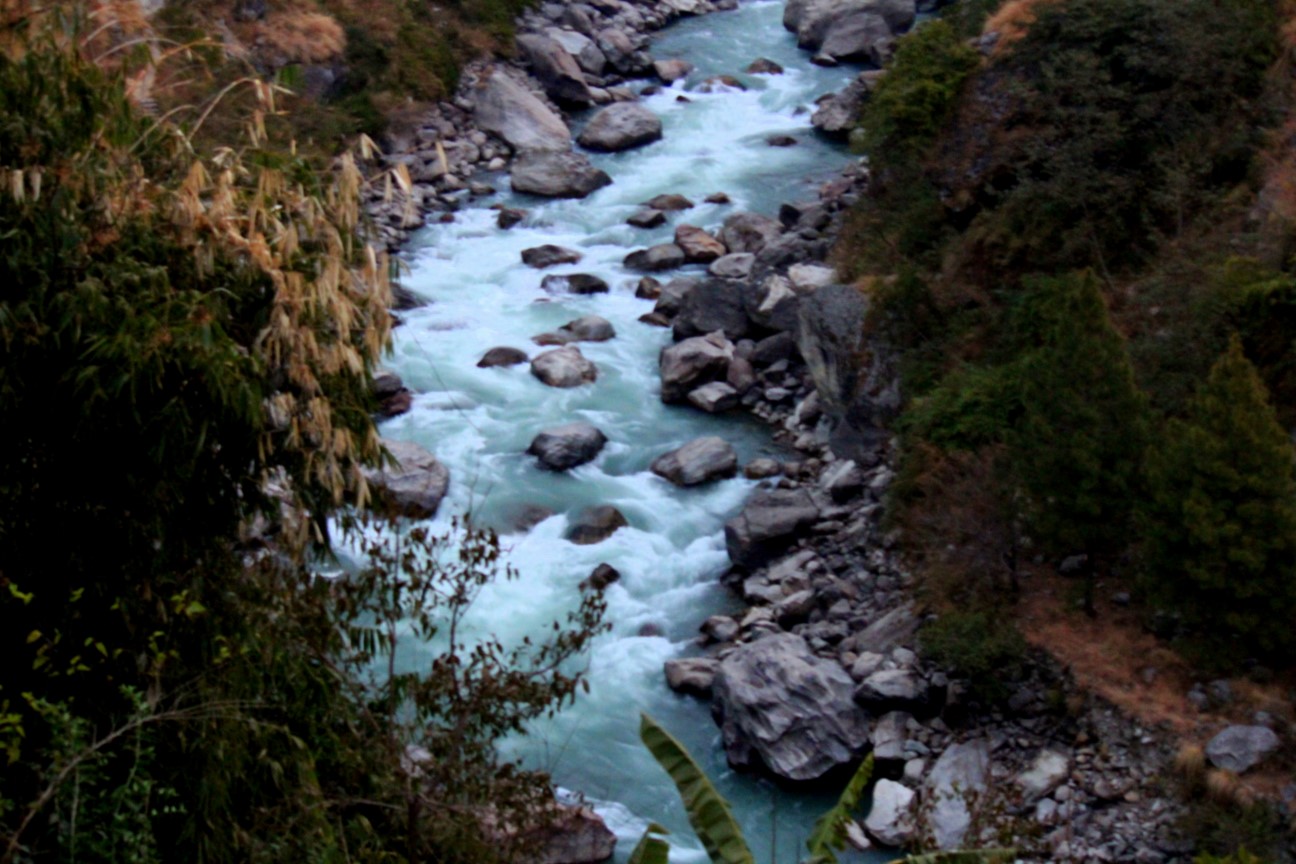
Seven kilometres north-west of Narayangadh, two of Nepal's great rivers meet. The Kali Gandaki, grey with glacial silt from Mustang, joins the greener Trishuli from the Rasuwa side, and from here on the river is called the Narayani. The meeting point is Devghat, the landing of the gods, one of the holiest bathing places in Nepal. Pilgrims have bathed here for generations, and the town has grown up around that daily act of devotion.

A long suspension bridge crosses the Trishuli between Chitwan and Tanahun districts, and on both banks temples, ashrams and simple houses climb the slope among trees. Many residents are elderly men and women who have come from all over Nepal and India to spend their last years beside the sacred water, reading scripture and bathing each morning. Mornings are calm, with bells, chanting and the sound of water; afternoons are slow and hot.

Devghat is an easy, rewarding half day from Sauraha or a stop on the road between Chitwan and Pokhara or Kathmandu. Come early to see pilgrims bathing in the cool light, cross the bridge, visit a temple or two, and sit by the river. In mid-January, at Maghe Sankranti, the quiet town fills with hundreds of thousands of pilgrims for one of Nepal's biggest melas. Outside the mela, it is one of the quietest places near Chitwan.

Why go

Dawn at the confluence

Arrive soon after sunrise to see pilgrims bathing where the grey Kali Gandaki meets the green Trishuli, offering water to the sun and lighting small lamps. The light and quiet make it Devghat's best hour.

The suspension bridge

A long footbridge crosses the Trishuli between Chitwan and Tanahun. Walk across for views down to the confluence and of the temples and ashrams on both banks. Hold the cables and walk at an even pace.

Ashrams and temples

Small temples, ashrams and shrines line the slopes. Visitors are welcome to look in quietly, and elderly residents are often happy to talk about why they came to live here. Remove shoes where asked.

Maghe Sankranti mela

In mid-January Devghat hosts one of Nepal's largest religious fairs. Pilgrims bathe at dawn, sadhus gather, and stalls sell sweets, sweet potatoes and religious items. Arrive before dawn and expect heavy traffic.

Saligram stones

The Kali Gandaki carries saligram fossils from Mustang. You may see them on altars and at stalls; they are sacred to Hindus and should not be taken from the river. Leave any you find where they lie.

१The story of Devghat

A riverside town for the last years of life

Hindus have long treated river confluences as especially sacred, and Devghat, where the Kali Gandaki meets the Trishuli, is among the most important in Nepal. The Kali Gandaki carries saligram stones, black ammonite fossils from Mustang worshipped as forms of Vishnu, and bathing where it joins another river is believed to cleanse sins. Funeral rites are also performed here, because many Hindus believe that dying or being cremated at a sacred confluence helps the soul toward liberation.

For generations, devout Hindus have come here to spend their final years. Some build small huts; others live in ashrams run by religious trusts. The town has a Sanskrit college, ayurvedic services, health camps and projects for elderly residents, and the government has set up a development committee to manage the area and build sites for end-of-life rites. The result is a town where many residents are old, unhurried and devout, and where the day is measured by prayer times rather than shop hours.

The quiet daily rhythm, of bathing, prayer, study and simple meals, changes once a year. At Maghe Sankranti in mid-January, pilgrims arrive by bus, car and on foot from across Nepal and India to bathe at the confluence on the most auspicious day of the winter, and the riverbanks fill with stalls, sadhus and families. For one day Devghat becomes one of the busiest places in the country, and by evening the town returns to its quiet routine.

२The legend
As it is told · देवघाट

Local tradition says the gods themselves came down to bathe at this meeting of rivers, which is why it is called Devghat, the gods' landing. Pilgrims also visit a cave that devotees associate with Sita, the heroine of the Ramayana. Bathing at the confluence on Maghe Sankranti is believed to bring great merit.

३The people

Who lives here

Devghat's residents are a mix of local Brahmin, Chhetri and Magar families, ashram staff, priests and Sanskrit students, and elderly pilgrims from across Nepal and India who have settled here for their final years. Bote families have long run ferries on these rivers. Nepali is the common language, with Hindi and Maithili heard among pilgrims.

Local name: Devaghat (Sanskrit)

४Words you will hear
Nepali
दोभान
dovan

Confluence of two rivers

Nepali
शालिग्राम
saligram

Black ammonite fossil from the Kali Gandaki, worshipped as Vishnu

Nepali
स्नान
snan

Ritual bath in a sacred river

Every word on this site

५What to eat

Chaku and til laddu

At Maghe Sankranti, families eat chaku, a hard sweet of molasses and ghee, til laddu made from sesame and jaggery, boiled sweet potato and tarul yam. Stalls at Devghat and sweet shops in Narayangadh sell them in January; tarul and sweet potato appear in markets through winter.

६Few people know

Things most guides leave out

Devghat sits where the Trishuli and Kali Gandaki meet, and below this confluence the river is called the Narayani, which forms the western edge of Chitwan National Park.

Wikipedia: Devghat; Wikipedia: Gandaki River

Maghe Sankranti draws huge crowds to Devghat each mid-January, making its mela one of the largest religious gatherings in Nepal; no one knows exactly when the tradition began.

Wikipedia: Devghat

A historic suspension bridge links the Tanahun and Chitwan sides of Devghat, and the town has a post-graduate Sanskrit college, the Mahesh Sanskrit Gurukul.

Wikipedia: Devghat

Untold Nepal, region by region

Getting there

How to reach Devghat

Road

Devghat is about 7 km from Narayangadh, 15 to 20 minutes by car or local bus, and about 20 km from Sauraha, around 45 minutes. From Kathmandu or Pokhara, turn off near Narayangadh; it makes an easy stop on the way to or from Chitwan.

On foot

Within Devghat, walk the riverside paths and cross the suspension bridge on foot. Paths are uneven and steep in places, so wear comfortable shoes with grip.

Where to stay

Most visitors come for a half day and stay in Sauraha, about 45 minutes away, or in Bharatpur, which has business hotels close to the airport. Devghat has simple ashram guesthouses used mainly by pilgrims; they are basic and follow religious routines. During the Maghe Sankranti mela, rooms in Narayangadh and Bharatpur fill quickly, so book early if you plan to attend.

Local tips

  • Dress modestly, covering shoulders and knees, and remove shoes where asked.
  • Ask before photographing people bathing or praying, and never photograph cremations.
  • Do not swim; the currents at the confluence are strong even in the dry season.
  • For the Maghe Sankranti mela, arrive before dawn and expect large crowds and traffic.
  • Combine Devghat with Bishazari Tal or a taas lunch in Narayangadh for a full day.

On the map

Devghat and what is near it

Map of Devghat, Sauraha, Bishazari Tal, BarauliIndiaChinaNepalGandakiDevghat1DevghatSauraha2SaurahaBishazari Tal3Bishazari TalBarauli4Barauli50 kmN
  1. 1Devghat
  2. 2Sauraha
  3. 3Bishazari Tal
  4. 4Barauli
Drawn by Book Nepal Trip from Natural Earth outlines (public domain). International borders as depicted by Nepal. Rivers: Karnali, Gandaki and Koshi systems. Not for navigation.

Questions

Devghat: what travellers ask

Where is Devghat?

Devghat is at the confluence of the Kali Gandaki and Trishuli rivers, about 7 km north-west of Narayangadh, on the border of Chitwan and Tanahun districts. It is about 20 km from Sauraha, around 45 minutes by road, and easy to reach from the Kathmandu–Narayangadh and Pokhara–Narayangadh roads.

Why is Devghat sacred?

Hindus consider river confluences especially holy, and Devghat joins two major rivers, the Kali Gandaki and the Trishuli, which become the Narayani. Bathing here is believed to cleanse sins, and many elderly devotees choose to spend their final years by the confluence. The name means the landing place of the gods.

How long should I spend at Devghat?

Two to three hours is enough for most visitors: the confluence, a walk over the suspension bridge and a visit to a temple or ashram. Come at sunrise for the bathing. Combine it with Bishazari Tal or lunch in Narayangadh to make a half or full day from Sauraha.

Is Devghat worth visiting from Chitwan?

Yes, if you are interested in Hindu culture, rivers and quiet places. It shows a side of the Terai that safaris do not, and it is close to Sauraha. It also makes a good stop on the drive between Chitwan and Pokhara or Kathmandu.

What is the best time to visit Devghat?

October to March for comfortable weather, with mid-January for the Maghe Sankranti mela. Early morning is the best time of day. From June to September the rivers run high and fast; the bridge and temples stay open, but riverbank access is limited.

Can non-Hindus enter temples at Devghat?

Most temples and ashrams at Devghat welcome respectful visitors of any faith to their courtyards, but some inner shrines are for Hindus only. Watch for signs, ask your guide, remove shoes where required and dress modestly. When in doubt, stay in the courtyard.

Are there cremations at Devghat?

Yes, Devghat is used for Hindu funeral rites, and you may see cremations at the riverbank. Treat them with respect: keep your distance, do not take photographs and stay quiet. Ask your guide where to stand if a ceremony is in progress.

What is the Maghe Sankranti mela at Devghat?

It is a large religious fair held on the first day of Magh, usually 14 or 15 January, when hundreds of thousands of pilgrims bathe at the confluence. Sadhus, stalls and families fill the banks. Check current status before you travel for the date and traffic arrangements.

Can I see saligram stones at Devghat?

Yes. Saligrams, black ammonite fossils carried by the Kali Gandaki from Mustang, are worshipped as forms of Vishnu and seen on altars and sometimes at stalls. They are sacred, and exporting fossils from Nepal may be restricted, so check the rules before buying one.

Plan with a local planner

Tell us your height, we will find the trail

Easy hills or a 5,000 m pass, a week or a month: three short questions and a planner sends a first plan, with the sleeping height of every night and an itemised price.

  1. १Tell us where, when and how high you want to go
  2. २Get a first plan and an itemised price within one working day
  3. ३Change anything until it fits. Pay a deposit only when you book
Plan my Nepal trip