Asoj 2083 BSअसोज २०८३· Nepal runs on its own calendar

Eastern Nepal · pilgrimage site

Pathibhara

पाथीभरा Mukkumlung (Limbu)

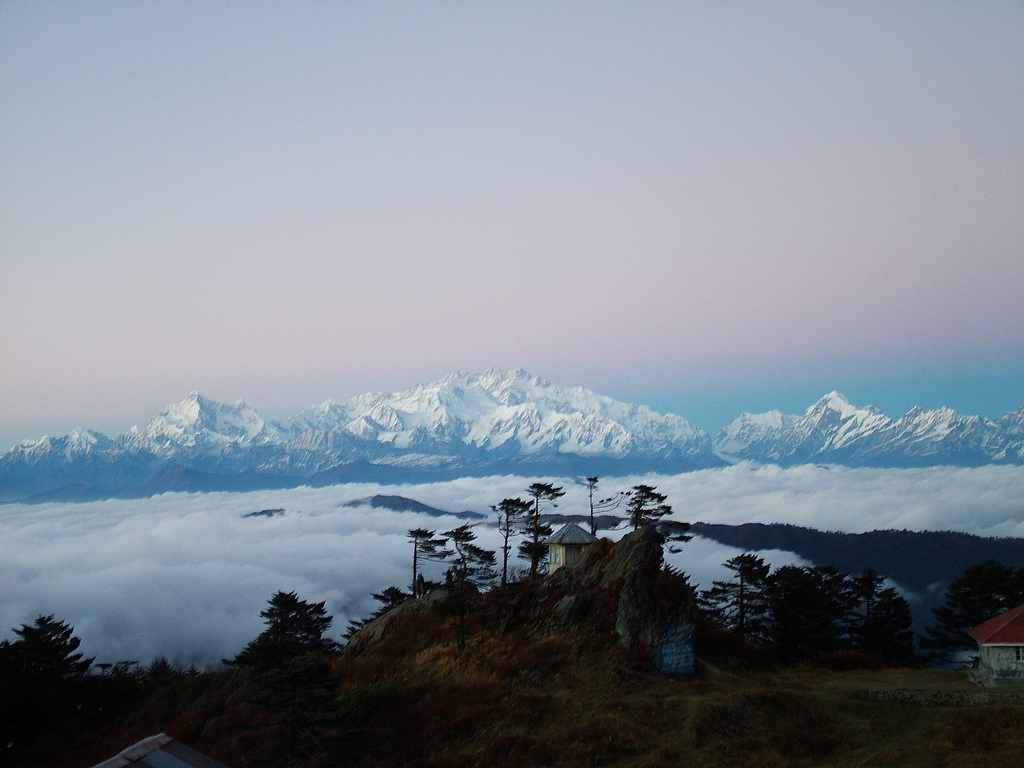
Pathibhara Devi, known in Limbu as Mukkumlung, is a hilltop shrine at 3,794 m north-east of Phungling, the bazaar of Taplejung district. It is one of the most visited pilgrimage sites in eastern Nepal, reached by a steep walk of a few hours from the road head, with views to the Kanchenjunga range on clear mornings.

  • Stay 2–3 nights
  • Best Mar – May · Oct – Nov
  • लेकLekh
Pathibhara
Photo: Sanjeevstha · CC BY-SA 4.0, Wikimedia Commons

The air at Pathibhara

Altitude3,794 m42.9% of the way to 8,849 m
BeltLekhलेक · High hills: pasture, pine, the last fields
Each breath62%of the oxygen at sea level
Water boils87.1 °Cso dal takes longer here
vs Kathmandu-15.6 °Ctypical difference by height

Oxygen, boiling point and temperature are worked out from the standard atmosphere for 3,794 m; real days vary with weather.

Taplejung is Nepal's far north-eastern district, home of the Kanchenjunga region. Above its bazaar town of Phungling rises a long forested ridge, and on its highest knoll sits the shrine of Pathibhara Devi. Pilgrims from across Nepal, Sikkim, Darjeeling and further into India climb here to ask the goddess for a wish, and come back to thank her when it is granted. Some come every year; many come once in a lifetime.

The shrine itself is small: an open stone sanctum on the summit, ringed by bells, tridents, flags and offerings. What makes the trip is the climb through rhododendron forest, the crowd of pilgrims on festival days, and on a clear morning the view across to Kanchenjunga, Jannu and the snow peaks of the north. The mix of devotion, effort and mountain scenery makes it unlike any temple visit in the Kathmandu Valley.

For trekkers, Pathibhara is a natural first stop on the way into the Kanchenjunga region, or a short pilgrimage on its own from Taplejung. We plan it as a two or three day trip with a night near the road head, so you can climb early and be on the top before cloud comes up. Add a night in Phungling for the bazaar and a Limbu village visit, and you have a rounded short trip to the far east.

Why go

The pre-dawn climb with pilgrims

Most pilgrims start in the dark and climb steeply through forest for a few hours to reach the shrine at sunrise. Walking with them, bells ringing and torches bobbing up the hill, is the heart of the trip.

The summit shrine at 3,794 m

An open stone sanctum on the hilltop, ringed by bells, tridents, prayer flags and red cloth. Join the queue, watch the offerings, and give space to families completing their bhakal, a vow made to the goddess.

Kanchenjunga from the top

On clear mornings, mostly October to December, the Kanchenjunga range and Jannu (Kumbhakarna) stand to the north and east of the summit, with lesser snow peaks between. Cloud often rises by mid-morning, so arrive early.

Rhododendron forest in spring

The trail climbs through rhododendron, oak and fir. From late March to early May the gurans bloom red along the path, and spring, with Chaite Dashain, is one of the two busy pilgrim seasons.

Phungling bazaar

Taplejung's hill bazaar has the district's shops, offices and simple hotels. Walk its streets in the evening, eat kinema and dal bhat, and stock up on cash and supplies before Pathibhara or the Kanchenjunga trek.

१The story of Pathibhara

Mukkumlung, the hill of two faiths

Pathibhara is a meeting place of two traditions. For Hindus, the goddess here is a form of Shakti, and the temple is counted among the important Shakti shrines of Nepal. For the Limbu (Yakthung) people, whose homeland this is, the hill has its own name, Mukkumlung, and its own place in their sacred geography. Many Limbu families treat the hill as a site of their own Kirat worship, and the relationship between the two traditions is part of local identity.

The temple has long drawn pilgrims from the plains and from Darjeeling and Sikkim. Devotees bring flowers, coins, red cloth, bells and, in some cases, animals for sacrifice. Families from the former royal household of Nepal were among its well-known visitors. Pilgrims usually spend a night at the foot of the hill, climb before dawn, make their offerings and walk down by midday. Over the years the trail has been improved with steps, shelters and tea shops, run by families from the villages below.

In recent years a planned cable car to the summit has been strongly contested in Taplejung, with Limbu organisations among those objecting that development would harm a sacred site. Supporters argue that it would make the shrine easier to reach for older pilgrims and bring business; opponents say the hill should be climbed, not ridden. The debate continues, and it says much about what the hill means to the people who live beneath it. Check current status before you travel.

२The legend
As it is told · पाथीभरा

Local legend says that shepherds once grazed their flocks on this hilltop, and one day hundreds of their sheep vanished without trace. That night the goddess appeared in a dream to one of the shepherds and asked for an offering and a shrine on the summit. When the shepherds made the offering, the tradition of worship began. Pilgrims still say the goddess of Pathibhara grants the wishes of those who climb with a sincere heart.

३The people

Who lives here

Taplejung is the heart of Limbuwan, the homeland of the Limbu (Yakthung), who speak the Limbu language and follow the Mundhum, their oral scripture. Brahmin, Chhetri, Rai, Gurung, Tamang, Sherpa and Newar families also live in the district. Around Pathibhara, families farm potatoes, maize and cardamom, keep cattle and run the tea shops, lodges and stalls that serve pilgrims along the trail.

Local name: Mukkumlung (Limbu)

४Words you will hear
Nepali
भाकल
bhakal

A vow made to a deity, repaid with an offering when a wish is granted

Nepali
प्रसाद
prasad

Blessed food or offering shared after worship

Limbu
मुक्कुमलुङ
Mukkumlung

The Limbu name for the Pathibhara hill

Every word on this site

५What to eat

Sel roti and milk tea

Ring-shaped fried rice-flour bread, eaten with sweet milk tea at the stalls by the trailhead before the dawn climb. Pilgrims buy it hot from tea shops at the road head and along the path. Down in Phungling, look for kinema, the Limbu fermented soybean dish.

६Few people know

Things most guides leave out

The temple is known by two names: Pathibhara Devi to Hindu pilgrims and Mukkumlung to the Limbu people, for whom the hill is a sacred place in their own tradition.

Wikipedia: Pathibhara Devi Temple

Taplejung Airport at Suketar, the nearest airstrip to Pathibhara, opened in October 1976 and restarted scheduled service in 2016 after its runway was blacktopped. Services remain irregular.

Wikipedia: Taplejung Airport

Phungling, the bazaar town below Pathibhara and the headquarters of Taplejung district, became a municipality in May 2014 by merging the former village areas of Phungling and Dokhu.

Wikipedia: Phungling Municipality

Untold Nepal, region by region

Getting there

How to reach Pathibhara

Road

Phungling (Taplejung bazaar) is reached by the Mechi Highway north through Ilam and Panchthar, a long day of driving from Birtamod or Bhadrapur in Jhapa. From Phungling a road climbs toward the foot of the hill, and the last section is on foot. Road conditions change, especially in the monsoon; check current status before you travel.

Air

Taplejung Airport at Suketar has had flights from Biratnagar and at times from Kathmandu, but services are irregular and often suspended. Most travellers fly Kathmandu–Bhadrapur instead and drive. Check current status before you travel.

On foot

From the road head below the temple, a steep stepped trail climbs roughly 3–4 hours to the summit through forest, with tea shops on the way. The descent takes about 2–3 hours.

Where to stay

Phungling bazaar has simple hotels and lodges used by pilgrims, officials and Kanchenjunga trekkers, with private rooms and plain restaurants. Closer to the hill, basic pilgrim lodges and tea-house rooms near the road head let you start the climb before dawn; facilities are simple, with shared toilets and thick blankets. On festival days these fill quickly, so we book ahead or plan the climb from Phungling with an early drive.

Local tips

  • Start the climb before dawn: views are clearest early and cloud often closes in by late morning.
  • Avoid the biggest festival days if you dislike crowds; queues at the shrine can last hours during Dashain and Chaite Dashain.
  • Remove shoes and leather where asked, and do not photograph inside the sanctum or during sacrifices without permission.
  • Take the altitude seriously: 3,794 m is high enough for headaches, so climb slowly and drink water.
  • Bring a warm jacket, hat and gloves; the summit is often windy and near freezing at dawn.

On the map

Pathibhara and what is near it

Map of Pathibhara, Ghunsa, Ilam, SandakpurIndiaChinaBhutanBangladeshNepalKoshiPathibhara1PathibharaGhunsa2GhunsaIlam3IlamSandakpur4Sandakpur50 kmN
  1. 1Pathibhara
  2. 2Ghunsa
  3. 3Ilam
  4. 4Sandakpur
Drawn by Book Nepal Trip from Natural Earth outlines (public domain). International borders as depicted by Nepal. Rivers: Karnali, Gandaki and Koshi systems. Not for navigation.

Questions

Pathibhara: what travellers ask

Where is Pathibhara temple?

Pathibhara Devi temple stands at 3,794 m on a hilltop north-east of Phungling, the headquarters of Taplejung district in Koshi Province, far eastern Nepal. It is reached by road to the foot of the hill and then a steep walk of about 3–4 hours.

How do I get to Pathibhara from Kathmandu?

Fly from Kathmandu to Bhadrapur (about 45–50 minutes), then drive north via Ilam and Panchthar on the Mechi Highway to Phungling, a long day. Flights to Taplejung's own airstrip at Suketar are irregular. Allow at least four days from Kathmandu and back. Check current status before you travel.

When is the best time to visit Pathibhara?

October and November give clear skies and mountain views, and March to May brings rhododendrons and milder weather. The temple is busiest around Dashain in autumn and Chaite Dashain in spring. December to February is cold with possible snow on top; June to September is wet and cloudy.

Is Pathibhara open all year?

Pilgrims visit throughout the year, but winter snow and monsoon rain make the climb harder and sometimes unsafe. Heavy snow can close the upper trail for days, and the monsoon brings slippery steps and cloud. Check current status before you travel, especially from December to February.

Do I need a permit for Pathibhara?

No special trekking permit is needed for Pathibhara itself. If you continue north into the Kanchenjunga region you need the Kanchenjunga Conservation Area permit and a restricted area permit, and must trek with a licensed guide. Check current status before you travel.

Is Pathibhara part of the Kanchenjunga trek?

It can be. Some Kanchenjunga itineraries add Pathibhara as a first acclimatisation day from Taplejung, since it climbs to 3,794 m and returns lower to sleep. It is also visited as a pilgrimage on its own, in two or three days from the road head.

What should I offer at Pathibhara temple?

Pilgrims commonly offer flowers, incense, red cloth, coins and bells, and some make vows (bhakal) to return with an offering when a wish is granted. Visitors are not expected to make offerings, but a small donation is welcome. Ask our guide if you would like to take part.

Is altitude sickness a risk at Pathibhara?

Yes, mildly. At 3,794 m, headaches and breathlessness are common if you climb fast from a lower town. Go slowly, drink water, and turn back if you feel very unwell. Serious altitude sickness is uncommon on a same-day climb and descent but possible.

Are animal sacrifices made at Pathibhara?

Some pilgrims offer animals, especially on festival days, as is the custom at several goddess shrines in Nepal. If you would rather not see this, ask our guide which times are quieter and keep a distance from the sacrifice area.

Plan with a local planner

Tell us your height, we will find the trail

Easy hills or a 5,000 m pass, a week or a month: three short questions and a planner sends a first plan, with the sleeping height of every night and an itemised price.

  1. १Tell us where, when and how high you want to go
  2. २Get a first plan and an itemised price within one working day
  3. ३Change anything until it fits. Pay a deposit only when you book
Plan my Nepal trip