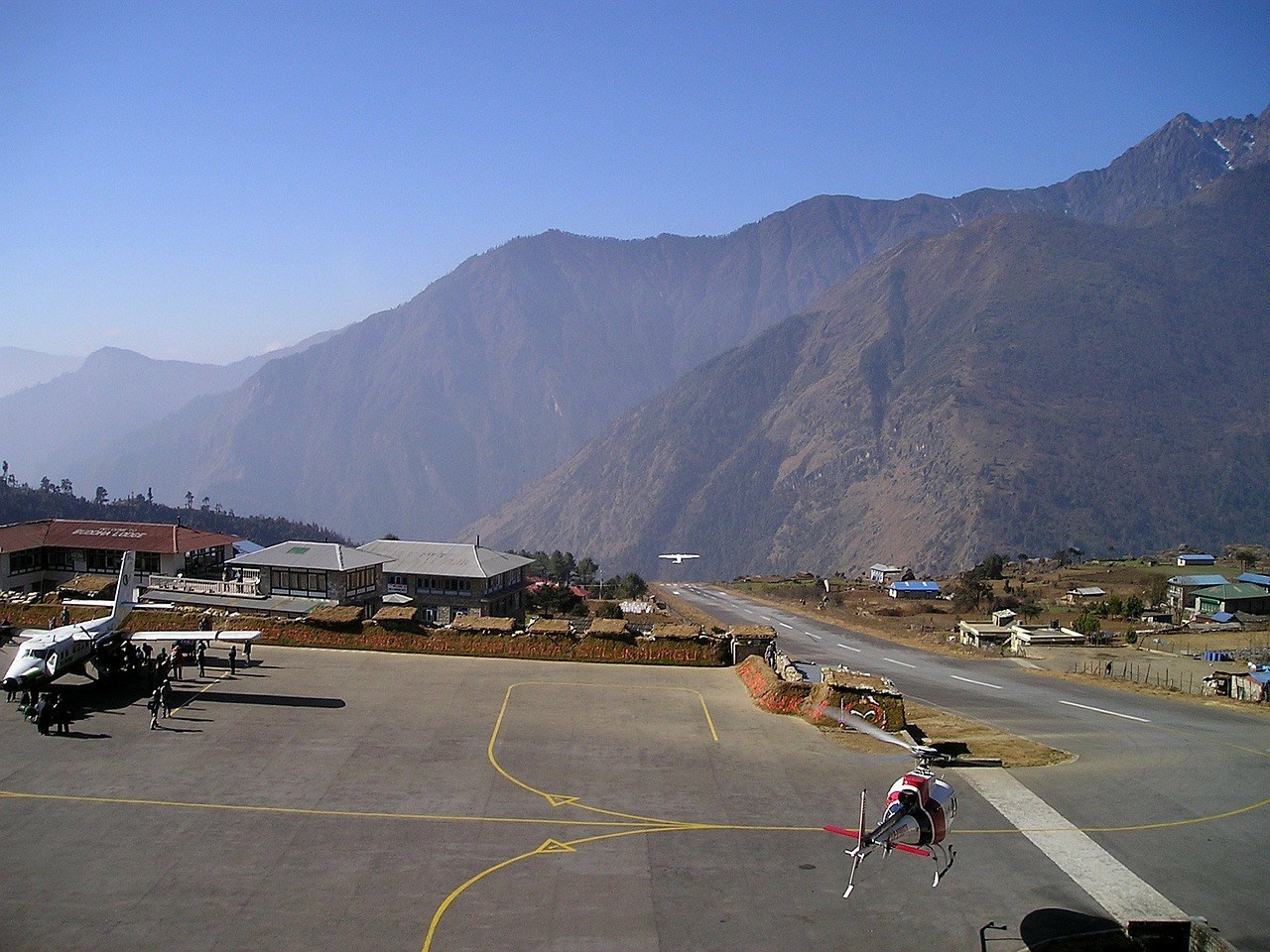
A runway built for schools, not tourists
In the early 1960s Edmund Hillary was building schools and clinics in Khumbu through the Himalayan Trust, and every sheet of roofing and bag of cement had to be carried for days from the roadhead. An airstrip would change that. In 1964 he bought land at Lukla from local Sherpa farmers and his team, with local labour, cleared and levelled a strip on the slope. The first aircraft landed on grass and earth.
For years the strip served the Trust and a trickle of trekkers. As the trekking business grew from the 1970s, so did Lukla: lodges went up along the trail, the runway was paved in 2001, and in 2008 the airport was renamed Tenzing-Hillary Airport in honour of the two men who first stood on Everest's summit in 1953. The runway is short, about 527 m, and climbs at roughly 12 percent towards a stone wall, so pilots land uphill and take off downhill with no second chance.
Lukla's people are mostly Sherpa, with Rai, Tamang and other families who came for work. Many lodge owners started as porters or guides. Since 2019 congestion at Kathmandu's airport has pushed many peak-season flights to Ramechhap airport at Manthali, a few hours' drive from the capital, so the first faces you see in Lukla now often arrive from a pre-dawn road journey rather than a city terminal.