Asoj 2083 BSअसोज २०८३· Nepal runs on its own calendar

Kathmandu Valley · village

Bungamati

बुङ्गमती Bunga (Nepal Bhasa)

Bungamati is a Newar village on a spur above the Bagmati, 8 km south of Patan, and the second home of Rato Machhindranath, the valley's rain god. It is known for woodcarving and for its square rebuilt after 2015. Spend half a day here with neighbouring Khokana.

  • Stay 0 nights
  • Best Oct – Apr
  • पहाडPahad
Bungamati
Photo: Raunak Maskay · CC BY-SA 4.0, Wikimedia Commons

The air at Bungamati

Altitude1,350 m15.3% of the way to 8,849 m
BeltPahadपहाड · The middle hills: terraces, towns, rhododendron
Each breath85%of the oxygen at sea level
Water boils95.4 °Cso dal takes longer here
vs Kathmandu+0.3 °Ctypical difference by height

Oxygen, boiling point and temperature are worked out from the standard atmosphere for 1,350 m; real days vary with weather.

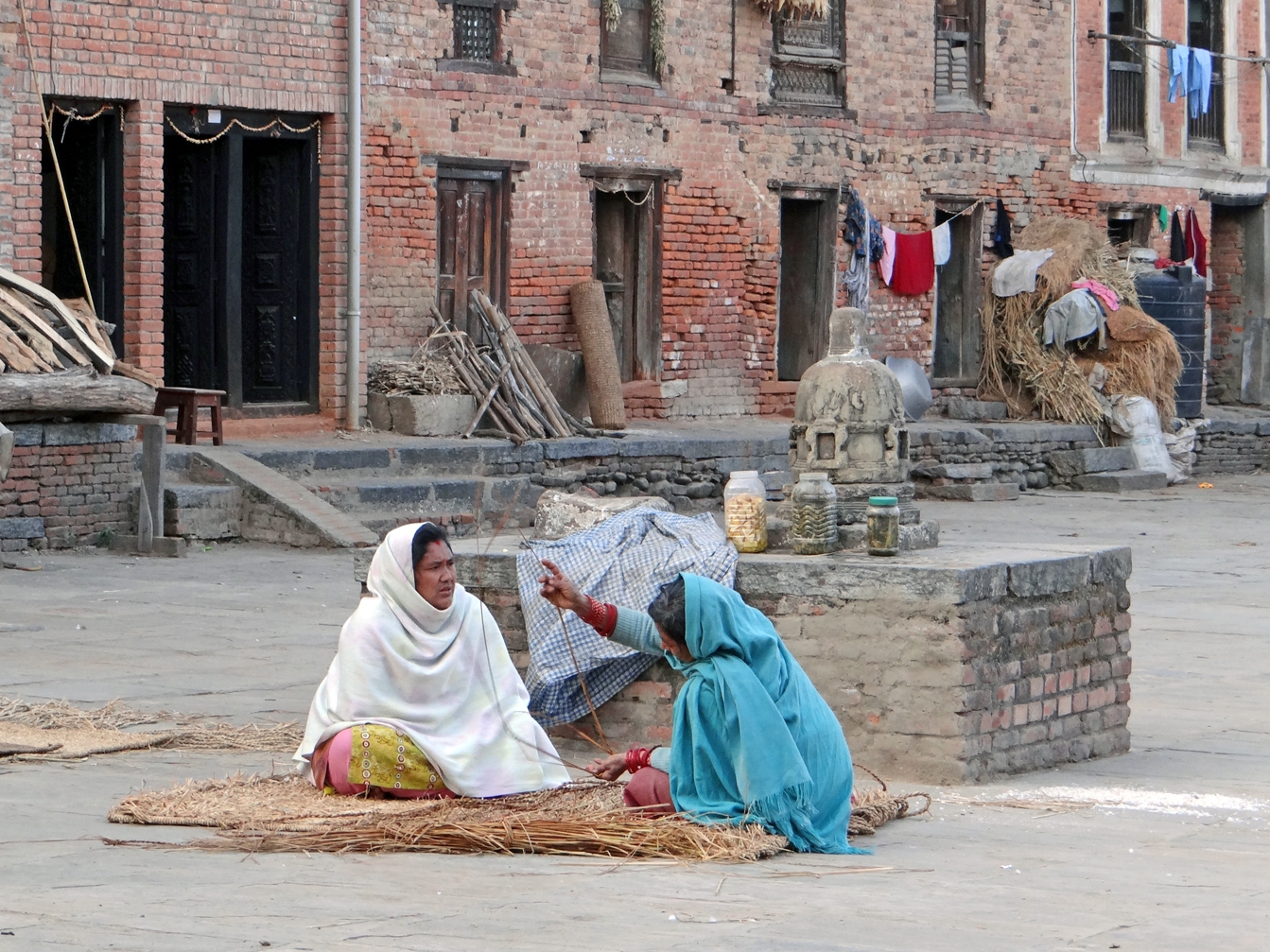
Bungamati feels like a small town from another century. Its brick houses crowd round a central square, where the shikhara temple of Rato Machhindranath rises from a broad courtyard. Around the square, men and women sit on doorsteps carving wood, drying grain, spinning wool and minding grandchildren. Cars stop at the village edge, and the lanes belong to people, chickens and bicycles.

The village is the second home of Rato Machhindranath, known here as Bunga Dyah. The god spends half of each year in Bungamati and half in Patan, and the great chariot festival in spring links the two. Bungamati's people have special duties in the festival, and in every twelfth year the chariot is pulled all the way from here to Patan.

The 2015 earthquake hit Bungamati very hard. The Rato Machhindranath temple fell and many houses were destroyed. Rebuilding has taken years, partly with traditional brick and carved wood and partly with concrete. Visiting now, you see both: the restored temple at the centre and families still finishing their homes. Bungamati is a lesson in how valley villages recover.

Why go

Rato Machhindranath's temple

The rebuilt shikhara in a wide courtyard at the heart of the village. When the god is in residence, families come with offerings; when he is in Patan, the temple waits. A good place to sit and watch village life.

Woodcarving workshops

Along the lanes round the square, carvers work on windows, masks and deities with chisels and mallets. Many welcome visitors to watch and will explain the patterns and woods they use.

Karya Binayak

A Ganesh temple on a wooded hill between Bungamati and Khokana, with valley views. It is a popular stop on the walk between the two villages, especially on Tuesdays and Saturdays.

Khokana's oil presses

A few minutes' walk away, the village of Khokana has long been known for mustard oil from traditional presses. Walk its lanes and watch grain and mustard seed spread to dry in the squares.

Cycling from Patan

The 8 km ride from Patan through Nakhu and the southern fields is a classic half-day bike trip, ending in Bungamati's square. Rental bikes and guided rides are easy to arrange in Patan or Thamel.

१The story of Bungamati

The village that shares a god with Patan

Bungamati is an old Newar settlement, and tradition ties its founding to the arrival of Rato Machhindranath in the valley, around the time of the Licchavi kings. The god was brought, legend says, to end a great drought, and Bungamati became his home. The village's life has turned around the god ever since: its guthis maintain his temple and play roles in his festival.

Each year, Rato Machhindranath is carried between Bungamati and Ta Bahal in Patan, spending about six months in each. In spring the great chariot festival is held in Patan; in every twelfth year it starts in Bungamati, and the huge chariot is hauled over the fields and rough roads to Patan, a journey that takes days. These twelve-year years are major events across the valley.

Beyond the god, Bungamati is a village of craftsmen. Its woodcarvers, many from Shilpakar and other Newar families, make windows, struts, masks and statues for temples, houses and hotels across Nepal. After the 2015 earthquake, their skills were needed for the rebuilding of temples across the valley, and workshops in the village were busier than they had been for generations.

२The legend
As it is told · बुङ्गमती

Local legend says a twelve-year drought struck the valley after the yogi Gorakhnath sat in meditation on the nagas, the serpents who bring rain. King Narendra Deva, the priest Bandhudatta and a farmer travelled to Kamaru in Assam and brought back Karunamaya, the compassionate one, in the form of a bee in a pot. When Gorakhnath stood to honour his guru Machhindranath, the rain returned, and the god made his home at Bungamati.

३The people

Who lives here

Bungamati is a Newar village of farming Maharjan families and craftsmen, especially woodcarvers, with Buddhist and Hindu households living side by side. Nepal Bhasa is the daily language. Many young people now work in Kathmandu or abroad, but return for the chariot festival and family rituals. Women run many of the household workshops and small shops, and the village guthis still manage temple duties.

Local name: Bunga (Nepal Bhasa)

४Words you will hear
Nepal Bhasa
बुंगद्यः
Bunga Dyah

The god of Bungamati, Rato Machhindranath

Nepal Bhasa
शिल्पकार
Shilpakar

Newar woodcarver; also a family name

Nepal Bhasa
छेँ
Chhen

House or home

Every word on this site

५What to eat

Bara (wo)

A thick patty of ground black lentils fried on a flat iron pan, called wo in Nepal Bhasa, often topped with an egg or minced buffalo. It is offered in rituals and eaten as a snack. Small shops on Bungamati's square and in Khokana fry them fresh in mustard oil.

६Few people know

Things most guides leave out

Rato Machhindranath, the rain god of the valley, spends about six months of each year in Bungamati and six in Patan. In every twelfth year, the chariot is built in Bungamati and pulled all the way to Patan.

Wikipedia: Rato Machindranath Jatra

The shikhara temple of Rato Machhindranath in Bungamati's main square collapsed in the April 2015 earthquake, along with much of the village. It has since been rebuilt, with much of the work done by local craftsmen.

Wikipedia: Bungamati

Neighbouring Khokana, a short walk away, is known across the valley for its mustard oil, pressed in traditional mills. The village has long sold its oil in Kathmandu's markets.

Wikipedia: Khokana

Untold Nepal, region by region

Getting there

How to reach Bungamati

Road

Bungamati is about 10 km south of central Kathmandu and 8 km from Patan. A taxi takes 40 to 50 minutes from Thamel, or 25 to 35 from Patan, via Nakhu. Local buses run from Lagankhel in Patan to Bungamati, taking about 45 minutes. Cars park at the edge of the village.

On foot

Bungamati and Khokana are linked by a 20 to 30 minute walk via Karya Binayak. Cyclists ride from Patan in about an hour, partly on busy roads at the Patan end and then quieter village lanes.

Where to stay

Bungamati has very few places to stay, mostly small homestays and guesthouses in the village, and most travellers visit as a half-day trip. Patan's old town, 30 minutes away, is the natural base, with heritage guesthouses close to the Durbar Square. Central Kathmandu hotels such as Hotel Yak & Yeti or Kathmandu Guest House are about 45 minutes away by car.

Local tips

  • Leave the car at the village edge and walk; the lanes are narrow and busy with daily life.
  • Ask before photographing carvers at work, and consider buying a small piece if you spend time in a workshop.
  • Combine Bungamati with Khokana and Karya Binayak for a half-day loop on foot.
  • Visit in the morning, when the square is busy and the light is good.
  • Check with us whether Rato Machhindranath is in Bungamati or Patan during your visit.

On the map

Bungamati and what is near it

Map of Bungamati, Patan, Kirtipur, PharpingIndiaChinaNepalGandakiBungamati1BungamatiPatan2PatanKirtipur3KirtipurPharping4Pharping50 kmN
  1. 1Bungamati
  2. 2Patan
  3. 3Kirtipur
  4. 4Pharping
Drawn by Book Nepal Trip from Natural Earth outlines (public domain). International borders as depicted by Nepal. Rivers: Karnali, Gandaki and Koshi systems. Not for navigation.

Questions

Bungamati: what travellers ask

How far is Bungamati from Kathmandu?

About 10 km south of central Kathmandu and 8 km south of Patan. By taxi it takes 40 to 50 minutes from Thamel, or 25 to 35 minutes from Patan. Local buses from Lagankhel take about 45 minutes. Cyclists take about an hour from Patan.

What is Bungamati known for?

Bungamati is known as the home of Rato Machhindranath, the rain god whose chariot festival is held in Patan, and for its woodcarvers. It is also a good example of a traditional Newar village, with brick houses round a central temple square, rebuilt after heavy damage in 2015.

Can I see the Rato Machhindranath chariot in Bungamati?

The chariot is usually built and pulled in Patan. In every twelfth year, the festival starts in Bungamati and the chariot is hauled all the way to Patan. In other years, you can see the god's temple in Bungamati when he is in residence. Check current status before you travel.

Is Bungamati suitable for children?

Yes. Children usually enjoy the village life, animals and woodcarving workshops, and the lanes are mostly car-free. There are few facilities, so bring snacks and water. A cycling trip suits older children who ride confidently. Hats and sun cream help on bright days.

Can I stay overnight in Bungamati?

A few homestays and small guesthouses offer simple rooms in or near the village, but options are limited. Most travellers stay in Patan, 30 minutes away. If you want a village night, we can arrange a homestay with a local family.

How long do I need in Bungamati?

Two hours covers the village, temple and a workshop. Half a day lets you walk to Khokana via Karya Binayak, eat and return. A full day can combine Bungamati, Khokana, Chobhar and Kirtipur by car, or by bike for keen riders.

When is the best time to visit Bungamati?

October to April for dry, pleasant weather. Spring, from April to June, is when the Rato Machhindranath festival takes place in Patan, adding interest to a Bungamati visit. Monsoon months are wet and muddy but green and quiet.

What should I buy in Bungamati?

Woodcarvings, from small masks and figures to window frames, directly from the workshops. Khokana mustard oil is another local product. Buying directly supports the families who make them; ask about packing for larger items. Prices are usually fair, but compare two or three workshops first.

Is there public transport to Bungamati?

Yes. Local buses and microbuses leave from Lagankhel bus park in Patan to Bungamati, taking about 45 minutes. They are cheap but crowded and slow. A taxi or private car is easier, especially if you plan to combine several villages in a day.

Plan with a local planner

Tell us your height, we will find the trail

Easy hills or a 5,000 m pass, a week or a month: three short questions and a planner sends a first plan, with the sleeping height of every night and an itemised price.

  1. १Tell us where, when and how high you want to go
  2. २Get a first plan and an itemised price within one working day
  3. ३Change anything until it fits. Pay a deposit only when you book
Plan my Nepal trip